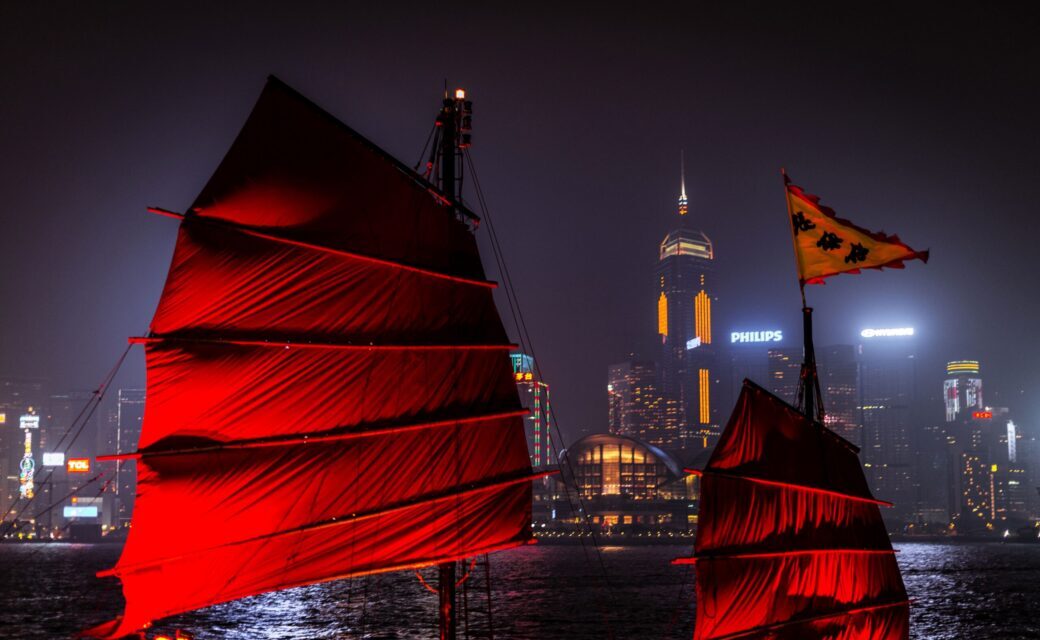

The vessel that has become so synonymous with Vietnam today, the Junk, is the descendant of centuries of maritime exchange, different cultures borrowing, adapting and improving ideas to create vessels perfectly suited to the waters they sailed.
Albeit that the Vietnamese already had their own centuries-old boatbuilding tradition, one innovation that they adopted from the Chinese builders was dividing their wooden hulls with watertight bulkheads, creating separate compartments. If one section of the hull was damaged and flooded, the entire vessel didn’t necessarily flood with it. A remarkably effective principle that remains fundamental to shipbuilding today. Another was the method by which the Chinese builders could seal the gaps between wooden hull planks using natural materials, including ramie fibre, lime and tung oil.
Some of the features have a more complicated history. Those beautiful fan-like sails, strengthened by horizontal battens, have very early surviving representations in Southeast Asia, including a remarkable 12th – 13th Century depiction at the Bayon temple in Cambodia. The battens weren’t simply decorative: they strengthened the sail and made it easier to raise, lower and control.
These were certainly not primitive little fishing boats. These vessels, broadly described as junks, ranged from small working boats to substantial ocean-going trading ships, carrying people and cargo along the great maritime routes of Asia.
So why Junks? It most likely derives from the Malay and Javanese word jong, used for large trading vessels seen in the South Asian Seas. Portuguese sailors adopted the word as junco in the 1500s, and from there it eventually entered English as Junk.
But as you can see, there is nothing junk about these extraordinary Junk vessels!