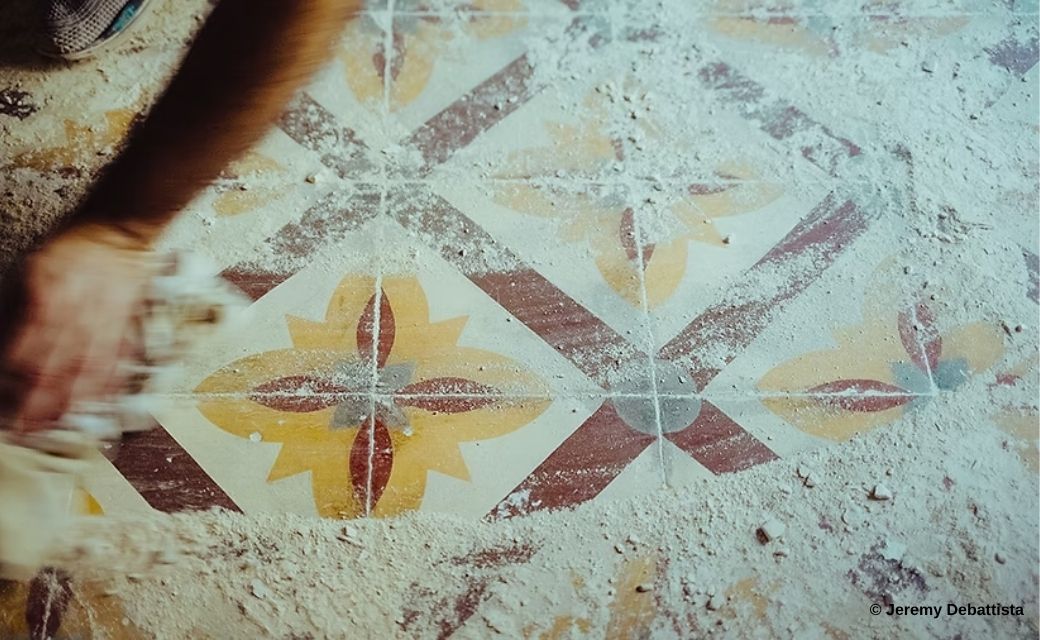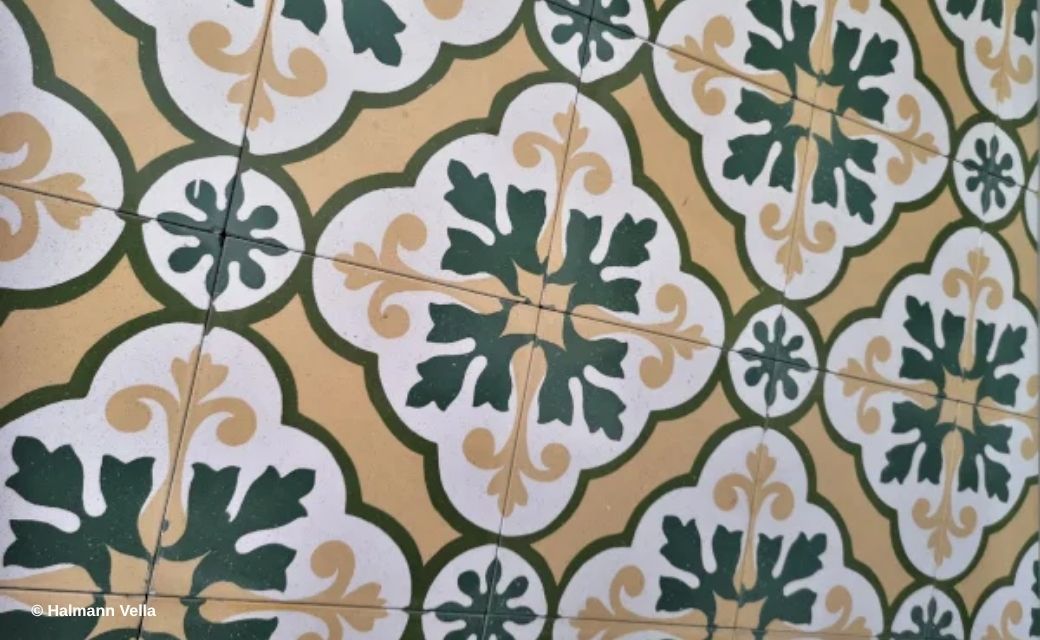

Walk into a traditional Maltese house, and you may find a little piece of history beneath your feet. Madum tal-Malti, Malta’s distinctive handmade cement tiles, are famous for their colourful geometric and floral patterns, yet they are more than they seem.
Unlike modern ceramic tiles, traditional Maltese tiles are made by hand, one at a time, using cement, powdered marble, coloured pigments, sand, and water. Traditionally, they used beach sand, but powdered marble is now more common.
The process begins with il-plakka, a specially made metal mould that acts like a three-dimensional stencil. Artisans carefully pour different coloured cement mixtures into its sections to create the pattern. Next, they add layers to form the tile’s body, compress it under pressure, and let it cure and harden, with no kiln involved.
Because the pattern is part of the cement rather than printed on top, every tile has its own character. Designs range from flowers and birds to stars, geometric shapes and the iconic eight-pointed cross.
Once common in Maltese homes, this traditional craft declined with the rise of mass-produced tiles and is now considered endangered. Thankfully, local artisans are keeping the tradition alive, one colourful tile at a time.