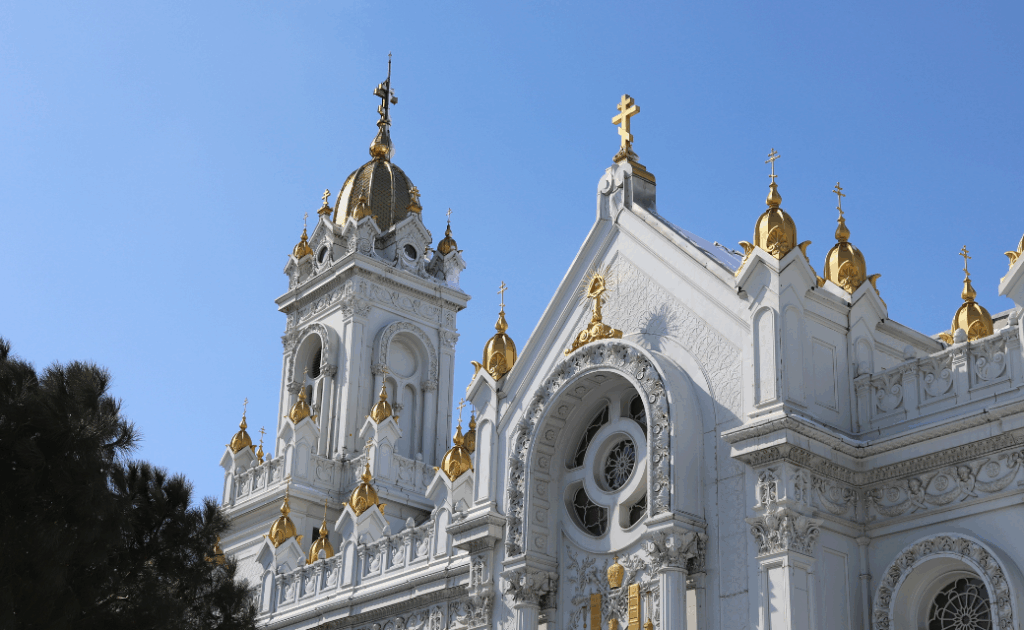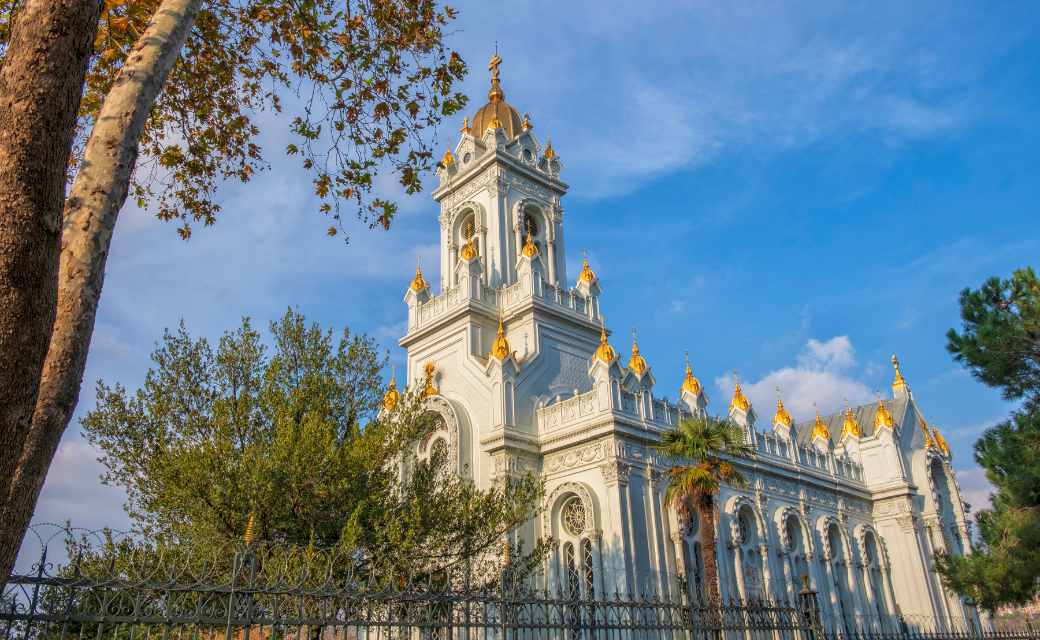

Standing proudly along the shores of Istanbul’s Golden Horn is one of the world’s most unusual and historically significant churches, the St. Stephen Bulgarian Iron Church. At first glance, its elegant white exterior appears to be made of stone, yet this remarkable landmark was constructed almost entirely of iron, earning it the nickname “The Iron Church” and securing its place as one of the most distinctive religious buildings in the world.
The church was built for Istanbul’s Bulgarian Orthodox community, who sought a place of worship that reflected their language, faith, and cultural identity. Rather than constructing the building from traditional stone or brick, the designers opted for cast iron because the soft ground along the Golden Horn could not easily support the weight of a large masonry church. The use of iron created a lighter structure and allowed for the intricate decorative elements that give the church its distinctive appearance.
The church was built from prefabricated cast-iron sections that were manufactured and assembled into components in Vienna before being individually numbered and shipped to Istanbul via the Danube River and the Black Sea. Weighing more than 500 tonnes in total, the iron pieces arrived ready to be fitted together and were assembled on site like a giant puzzle. This innovative prefabricated method of construction was highly unusual for the late nineteenth century and allowed the church to be completed and consecrated in 1898.
Today, the St. Stephen Bulgarian Iron Church remains one of the few surviving prefabricated iron churches in the world. More than a century after its completion, it continues to stand as a symbol of innovation, perseverance, and the enduring cultural heritage of Istanbul’s Bulgarian community, attracting visitors from around the globe and preserving an extraordinary chapter in architectural history.