Since its inception in 1723, Rio de Janeiro has been home to the world’s largest Carnival, with around 2 million people taking to the streets each day.
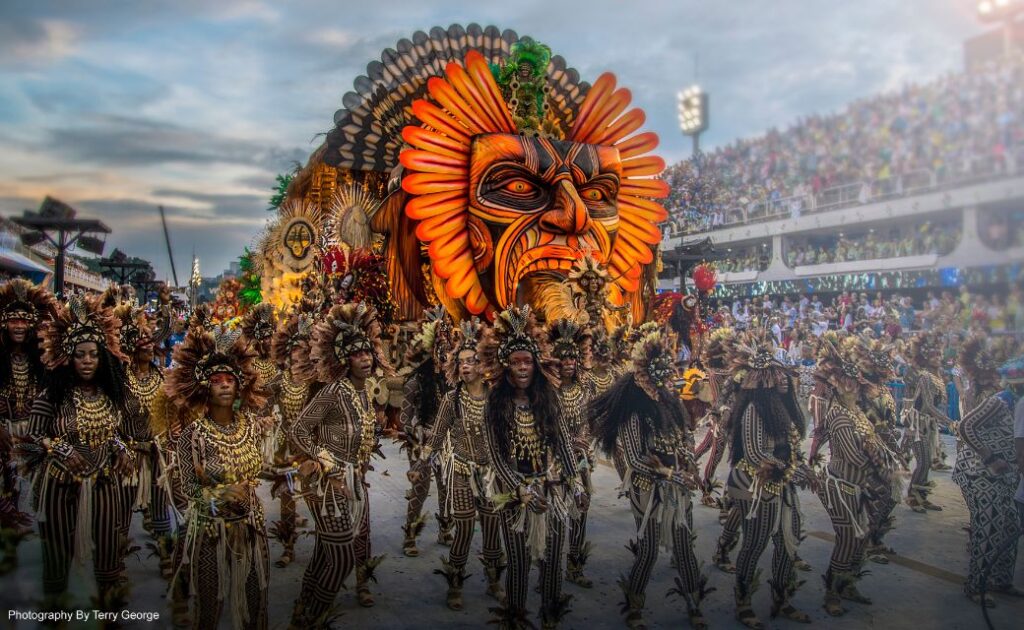
At the heart of the spectacle are the 12 elite Samba Schools of the Special Group (Grupo Especial), representing different neighbourhoods and competing for the annual championship at the Sambadrome. Each school spends US$3–6 million on elaborate costumes, thematic floats and drumming, showcasing Afro-Brazilian culture. Funding comes largely from private sponsorships. The Carnival takes place over 3 days, with 4 schools parading each day, and every school is given 70 minutes to meet strict judging criteria.
They are scored across categories, including storytelling, song, drums, harmony, flow, costumes, floats and props, the flag-bearing couple, the opening act and timing, with the central theme required to remain consistent across every category. Each parade must include at least 5 floats, and even the smallest deductions can decide the winner. The lowest-scoring school is relegated to Grupo de Acesso 1, while the top school from that division is promoted. The top 6 advance to the Champions’ Parade, where the winner is crowned Carnival Champion, earning fame, sponsorships and lasting prestige.
Despite generating an estimated US$1 billion for Brazil’s economy, most schools compete purely for the love of art and tradition.