Nestled just outside Chiang Rai in northern Thailand, Wat Rong Khun, better known as the White Temple, is one of the most imaginative and visually striking temples in the world. Designed in 1997 by Thai artist Chalermchai Kositpipat, this gleaming all‑white shrine uses mirrored glass and intricate sculptures to symbolise purity, enlightenment, and the path to spiritual awakening. Its surreal murals blend traditional Buddhist themes with modern pop‑culture imagery, making the temple both a sacred site and an artistic marvel.
Rather than relying on traditional funding, Chalermchai depends on small donations and support through his own art sales to keep the project independent, initially investing 40 million THB (approximately $1.2 million USD) himself. The temple complex is an evolving masterpiece, expected to be fully completed around 2070, more than 7 decades after construction began.
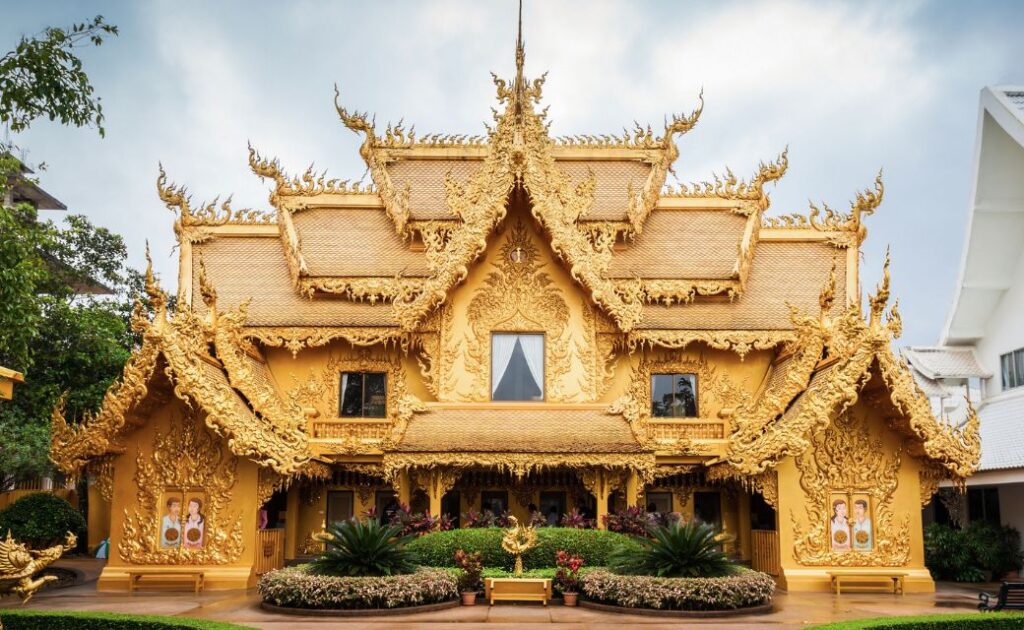
Amid all the pristine white architecture, one of the temple’s most talked‑about features is its gold‑plated public toilets, an unusual contrast that reflects the artist’s playful creativity.
Wat Rong Khun continues to serve as both a religious site and a major artistic project, offering visitors a unique perspective on Thai culture, Buddhist symbolism, and originality.