In the mountains of Japan, where dense forests give way to snow-covered valleys, live the Japanese macaques, the northernmost-living non-human primates in the world, distinctively adapted to some of the harshest conditions faced by any species of monkey.
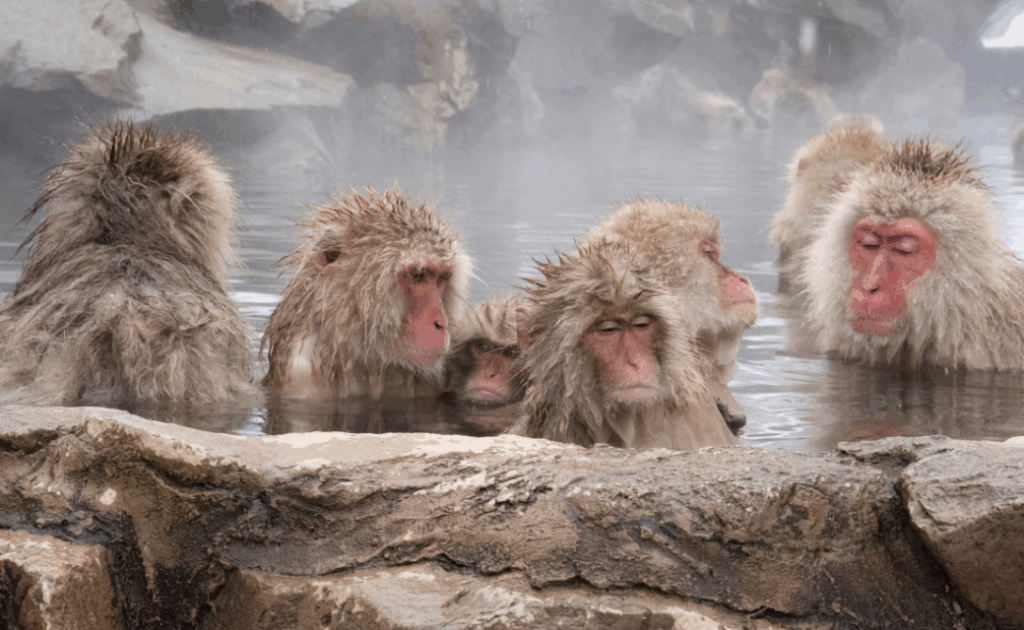
Often referred to as “snow monkeys,” they are best known for their habit of bathing in the natural hot springs of Jigokudani. During the freezing winter months, troops gather in steaming pools, conserving heat and energy while snow settles quietly around them, creating one of Japan’s most iconic wildlife scenes.
This behaviour is believed to have started through observation and imitation. As humans soaked in the warm onsen, a few curious macaques ventured into the water to discover its warmth. What began as a chance interaction gradually spread through the troop, with younger monkeys learning by watching others, an example of behavioural adaptation shaped by both environment and proximity to people.
Highly social and intelligent, macaques live in structured groups with clear hierarchies, communicating through vocalisations, facial expressions, and grooming rituals that strengthen bonds.
Resilient and resourceful, they offer a glimpse into survival, learning, and cultural behaviour in the wild.