Muscat’s coastline is a place where mountains descend into the sea, creating a meeting of stone and water. The rugged peaks carve out sheltered alcoves and hidden bays, where coral reefs flourish beneath the surface, forming a sanctuary alive with colour and movement for divers and snorkelers alike.
The reefs near Muscat, particularly around the Daymaniyat Islands and the Fahal Islands, are among the most remarkable in the region. Schools of barracuda sweep past honeycomb moray eels, and sea turtles rise effortlessly for air. In summer, upwellings from deeper waters attract pelagic visitors, whale sharks, eagle rays, and even black tip sharks. Closer to shore, Qantab Beach, with its timeless fishing village, opens onto coral gardens rich with biodiversity.
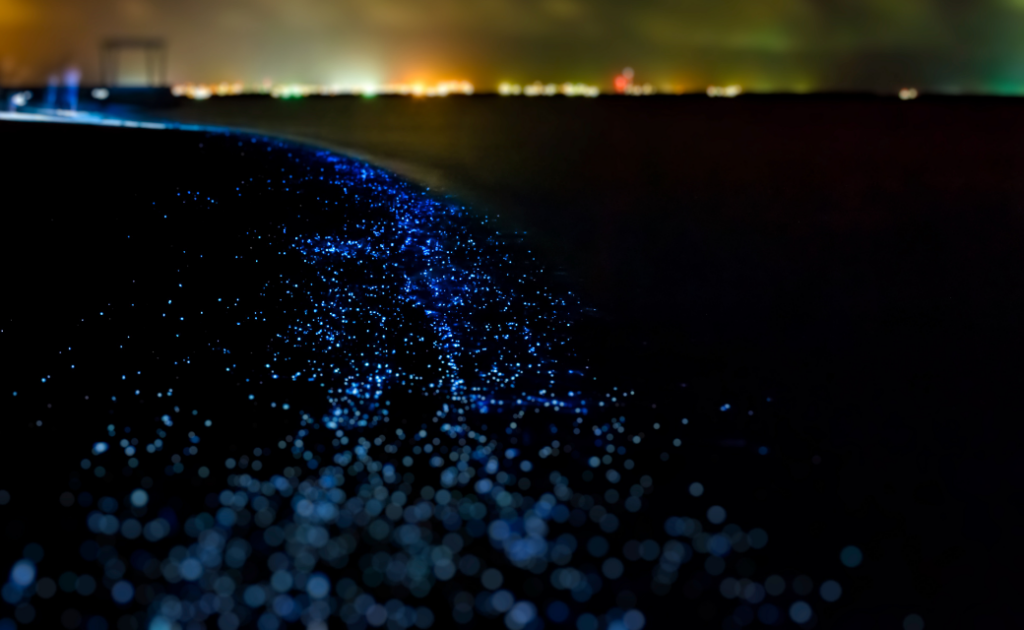
Though fragile, these ecosystems are being supported by conservation efforts, from removing ghost nets to innovative projects like 3D-printed reef structures near Seeb. But it is the natural wonders that truly steal the show. After dark, Muscat’s waters awaken with a magical glow as bioluminescent plankton, often called “sea sparkle”, ignite in response to every ripple. Disturbed by waves, the flick of a fin, or the sweep of a diver’s hand, they release a soft blue-green light, transforming the sea into a living canvas of stars. Bioluminescent diving, often arranged from Qantab, offers the chance to float in an ocean of light, an unforgettable experience.
By day, the reefs burst with colour and life, by night, the waters shimmer with bioluminescence. Whether in sunlight or starlight, the seas of Muscat never cease to amaze.