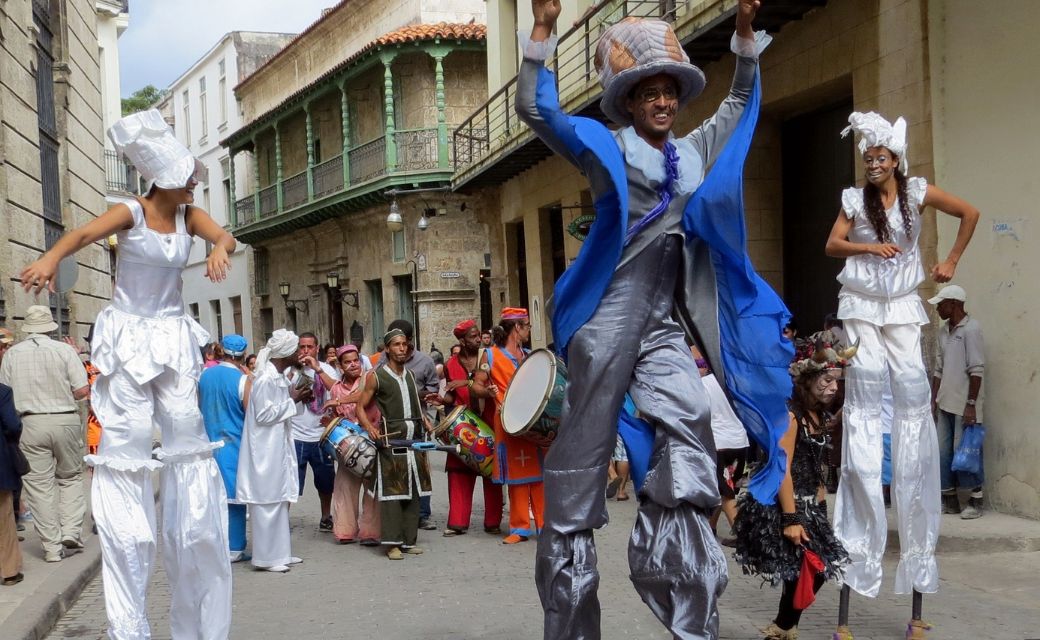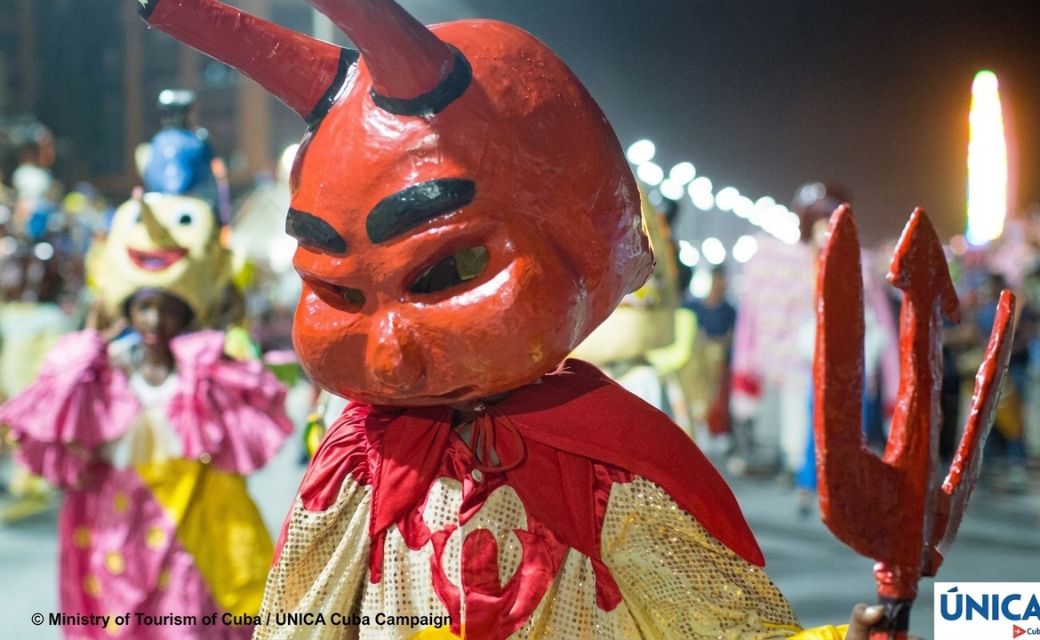

For a carnival like no other, head to Santiago de Cuba in July. With vibrant conga rhythms, dazzling costumes, and a buzzing atmosphere, this is Cuba’s biggest and most famous carnival. What makes it special is that it’s more than a street party; it’s where deep-rooted traditions and national history meet.
The festival dates back to the 17th-century Mamarrachos, when locals celebrated the harvest with music, dance, masks, and feasts. Today, those traditions live on through lively comparsas, colourful floats, Diablitos (Afro-Cuban devil figures), and the distinctive sound of the corneta china, a Chinese trumpet now synonymous with the carnival.
Unlike most carnivals, which take place before Lent, Santiago de Cuba has celebrated its carnival in late July for centuries, originally around the feast days of the city’s patron saint, Santiago. After the Cuban Revolution, the exact date of the carnival was established as 26 July to mark National Rebellion Day, directly commemorating the 1953 attack on the Moncada Barracks. This direct connection to a defining moment in Cuban history gives the carnival its distinctive blend of cultural celebration, history, and national pride.
As the streets come alive with music and dancing, the celebrations continue well into the night. Rich in culture, history, and infectious energy, Santiago de Cuba Carnival is an experience unlike any other.