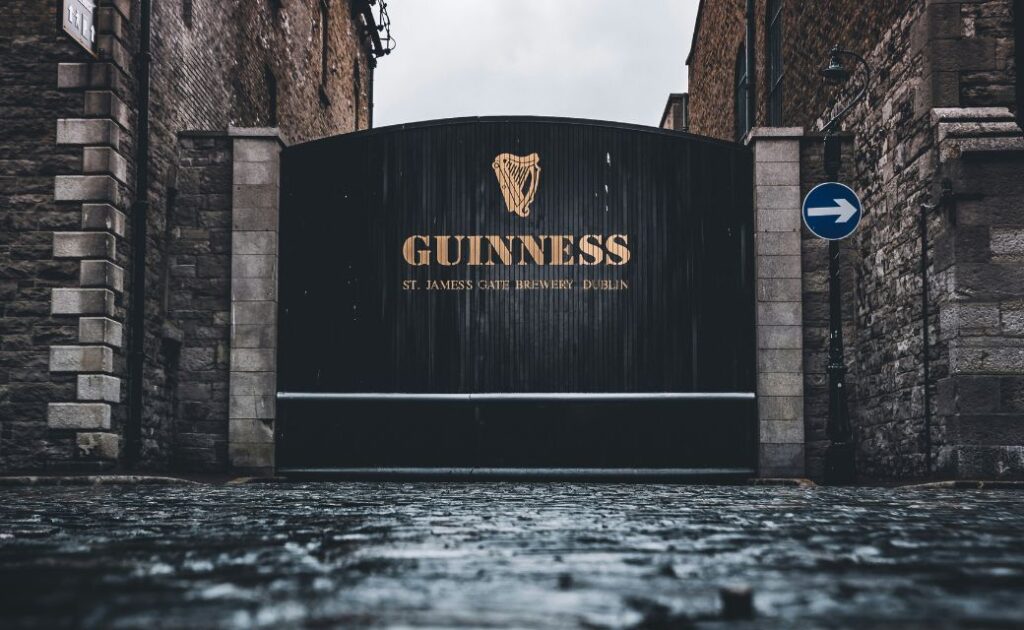
Few drinks can claim to embody a nation; Guinness does just that. The dark, velvety stout has become a symbol of Ireland itself. Its story began in 1759, when Arthur Guinness signed a legendary 9,000-year lease at St. James’s Gate Brewery in Dublin for a fixed £45 a year. What started as a small ale brewery soon transformed into something extraordinary. By the late 1770s, Guinness had shifted to brewing “porter”, a rich, dark beer that evolved into the world-famous stout we know today.
The genius of Guinness lies in both heritage and chemistry. Crafted with water from the Wicklow Mountains, malted and roasted barley, hops, and brewer’s yeast, each pint is a perfect balance of flavour and innovation. A portion of the barley is roasted, much like coffee, giving Guinness its dark ruby hue (not black) and deep, toasted taste.
The real magic, however, is in the pour. Whether on tap, in a bottle, or from a can, Guinness ensures the same creamy head, thanks to the widget, a tiny sphere that releases nitrogen to create 300,000 micro-bubbles. These finer bubbles form the stout’s velvety texture and the mesmerising illusion of bubbles sinking instead of rising.
Even the pour is an art form: two stages, a 45-degree angle, and exactly 119.5 seconds.
From its 18th-century roots to modern innovation, Guinness is more than a beer, it’s a fusion of science, tradition, and pure Irish genius.