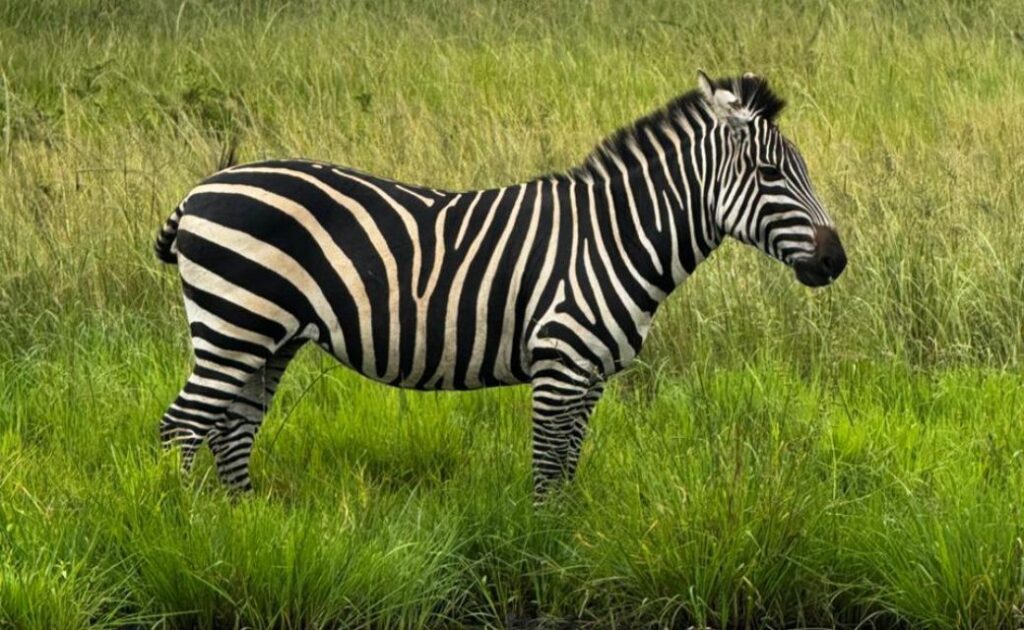
In eastern Rwanda, where rolling savannah meets papyrus wetlands and a chain of tranquil lakes, lies Akagera National Park, the country’s only savannah reserve and one of Africa’s most remarkable conservation recoveries.
Established in 1934, the park once covered more than 2500 km². Following the 1994 genocide, returning refugees settled in the region and, by 1997, nearly half the park was reallocated for communities. Today, the protected area spans 1120 km². Poaching and cultivation devastated wildlife populations; lions disappeared, and rhinos vanished entirely.
A turning point came in 2009 when the Rwanda Development Board partnered with African Parks to form the Akagera Management Company, strengthening protection and conservation management. A 120 km solar-powered electric fence was constructed along the park boundary to reduce human–wildlife conflict and curb poaching, while key species are now monitored with tracking collars.
Wildlife restoration soon followed. Founding populations of lions and rhinos were relocated primarily from South Africa, alongside additional rhinos translocated from European zoos to strengthen genetic diversity. Lions returned in 2015 and 2017 and have since produced several litters, while black rhinos were reintroduced in 2017, followed by southern white rhinos in 2021 and again in 2025.
Today, more than 13,000 animals and nearly 500 bird species thrive across Akagera’s rich ecosystem of savannah, woodland, wetlands and lakes, a powerful testament to resilience and modern conservation.