Perched high on Fourvière Hill, overlooking the city of Lyon, the Basilica of Notre-Dame de Fourvière, or as the locals affectionately call it, the “upside-down elephant”, a nod to the four towers, which resemble sturdy legs standing guard over the city, is one of France’s most breathtaking architectural treasures. Built between 1872 and 1896, this monumental church is a striking blend of Romanesque and Byzantine styles, with the four towers symbolising the virtues of Prudence, Temperance, Fortitude, and Justice.
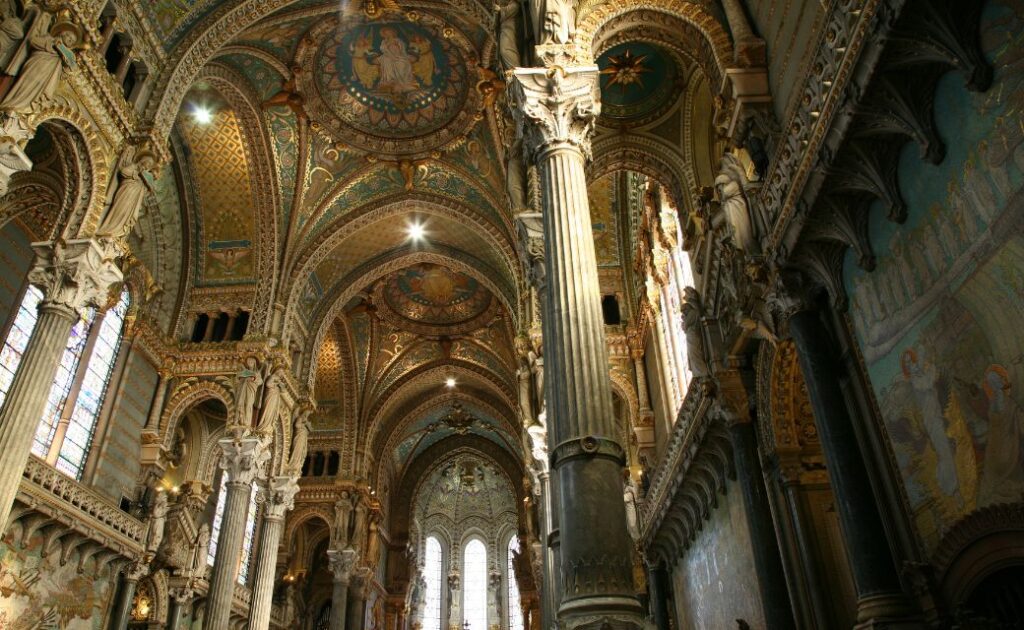
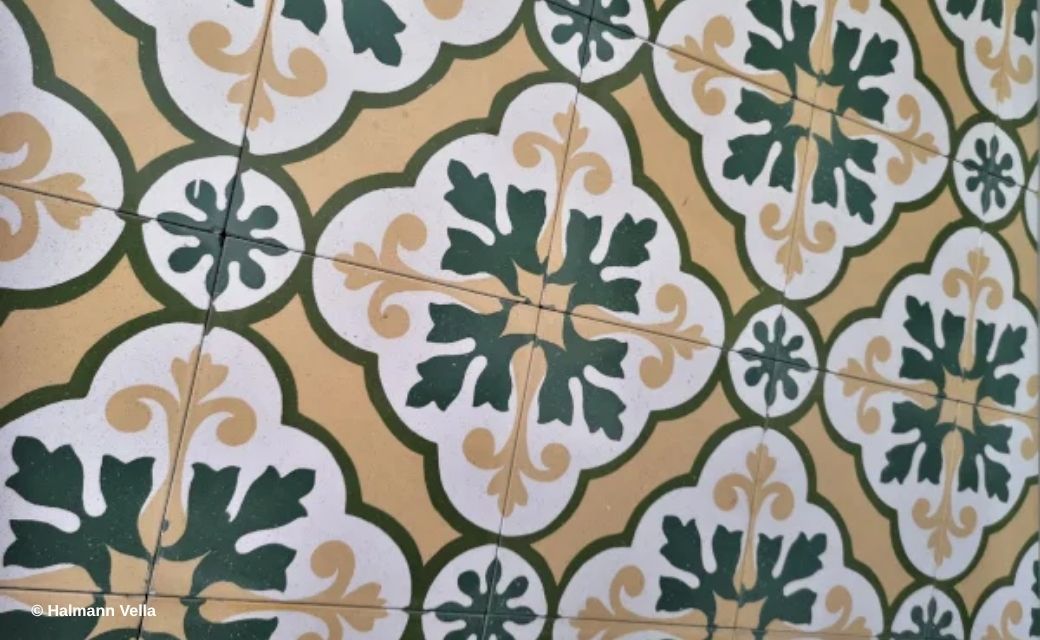
At first glance inside the basilica, the walls, ceilings and even the floor appear to be detailed paintings, but on closer inspection, they are mosaics, 2.5 million tiles, to be exact. Six enormous mosaics in the upper church depict the Virgin Mary’s influence on French history and the Church. The interior also features intricate carvings, marble columns, and lavish use of gold leaf. Meanwhile, the lower church, or crypt, dedicated to Saint Joseph, offers a quieter, contemplative space, symbolising the journey from darkness to light.
From the intricately tiled mosaic surface to the gilded statue of the Virgin Mary atop its bell tower, every inch of Fourvière showcases remarkable devotion and artistry.