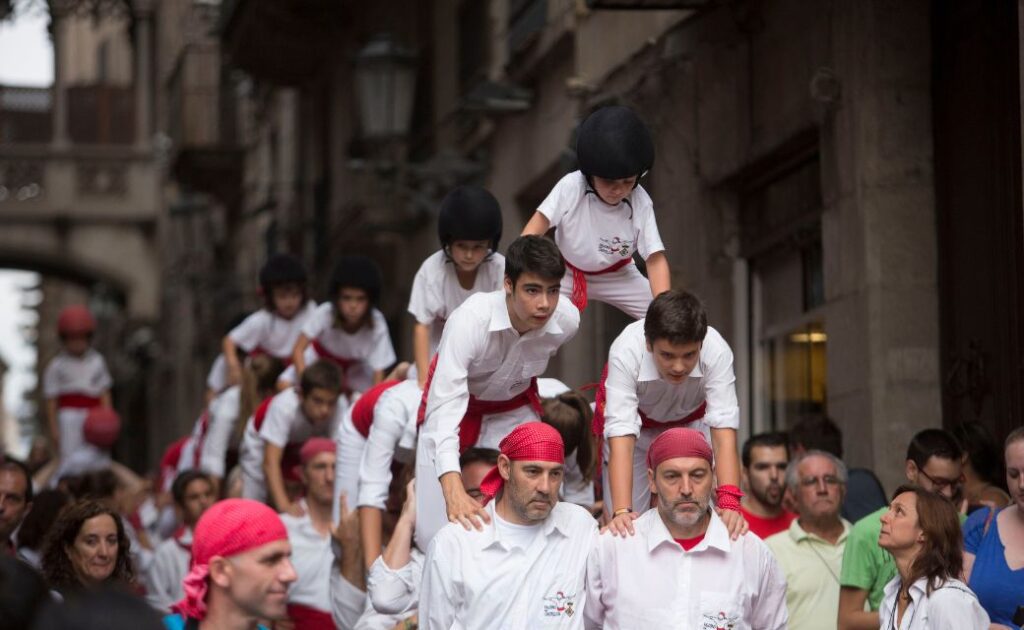
In the heart of Catalonia, every year, towns fill with people not to run, but to climb, literally, into one of the most extraordinary traditions in the world: the Castellers, or human towers. This centuries-old practice is far more than a spectacle; it’s a living testament to teamwork, courage, and community.
The towers, known as castells, can reach 10 levels (11 m), held together by nothing more than trust, strength, and precise coordination, while traditional Catalan music guides every movement. At the base, the pinya, forms a solid foundation, providing support and cushioning in case of falls. Followed by, the midsections of the tower, the tronc, and at the very top, the pom de dalt, usually composed of children. The smallest climber, called the enxaneta, raises their hand in triumph, signalling the tower’s successful completion, a moment that sends waves of cheers through the crowd.
Then comes the task of dismantling which involves the team carefully climbing down the tower after it’s built. A completed castell that is successfully dismantled is called descarregat, and the process is considered as difficult and important as building the tower itself. If the tower falls during the descent, it is considered carregat. Together, they rise, proving that with teamwork and trust, Catalonia stands head and shoulders above the rest.