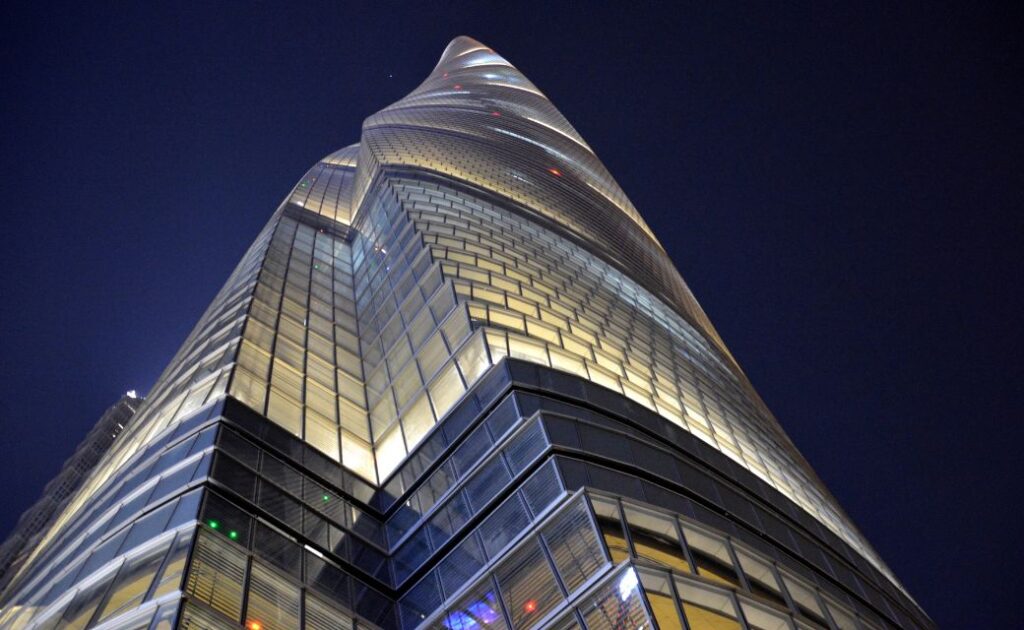
Towering above the futuristic Pudong skyline, Shanghai Tower is more than a skyscraper; it is a symbol of China’s modern innovation. Twisting into the clouds like a glass vortex, the tower was designed not only to stand tall but also to interact with its surroundings.
Standing 632 m tall with 128 floors, Shanghai Tower is the second-tallest building in the world. Opened in 2015, it was built for approximately US$2.4 billion and constructed using reinforced concrete, structural steel, and more than 20,000 glass panels forming its distinctive double-layered façade.
Its most striking feature is the twisting glass exterior, which rotates 120 degrees as it rises. This design reduces wind loads, improves energy efficiency, and enhances airflow regulation. The space between the two glass layers acts as a climate buffer, allowing the skyscraper to “breathe” naturally with changing weather conditions.
Designed by Gensler, the tower was conceived as a vertical city. Nine stacked zones contain offices, hotels, retail spaces, and sky gardens, creating communal green spaces high above Shanghai.
Its spiralling form is both aesthetic and functional, engineered to withstand typhoon winds while reducing structural stress. By day, the tower disappears into the clouds. By night, it glows over the Huangpu River like a beacon of the future.