While the initial impression may suggest a simple riverside custom, “In Gott’s Noma” is in fact a practice that has endured for hundreds of years. It is not a modern event, but an age-old phrase used by the raftmen of Wallenfels before setting out on the Wilde Rodach River in Bavaria. The traditional rafting season typically begins in May, when conditions on the river allow the seasonal Floßfahrten to commence.
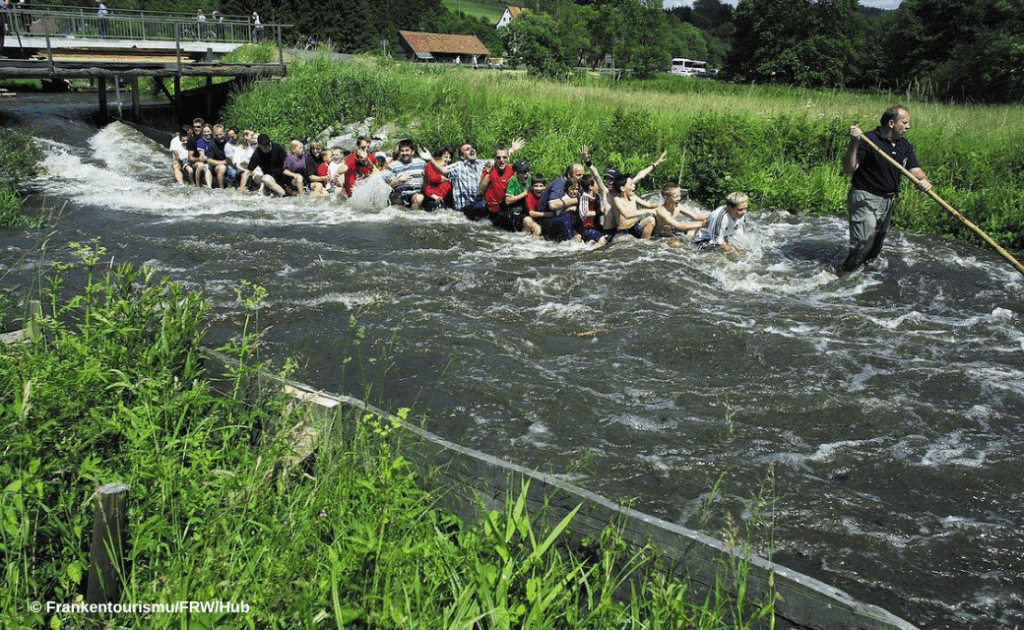
Derived from the dialect form of “In Gottes Namen” (“In God’s name”), the expression is spoken at the moment the timber rafts are launched into the water, just as they reach the first weir. It marks both a beginning and a blessing, acknowledging the uncertainty of the river while signalling the start of the journey downstream.

Rafting in Wallenfels dates back more than 800 years, when timber was transported from the dense Franconian Forest via interconnected waterways towards the Main and Rhine. The rafts were carefully constructed from bound logs and required coordination, skill, and deep familiarity with the river’s changing conditions. The Flößer were not only workers, but custodians of a craft shaped by repetition and respect for nature.

Although its commercial purpose has long since faded, the tradition continues as a cultural experience. Seasonal raft journeys now retrace historic routes, complete with weir drops, rushing currents, and forested landscapes.

“In Gott’s Noma” remains unchanged. It continues to connect past and present, where craftsmanship, water, and tradition meet in a single moment of departure.