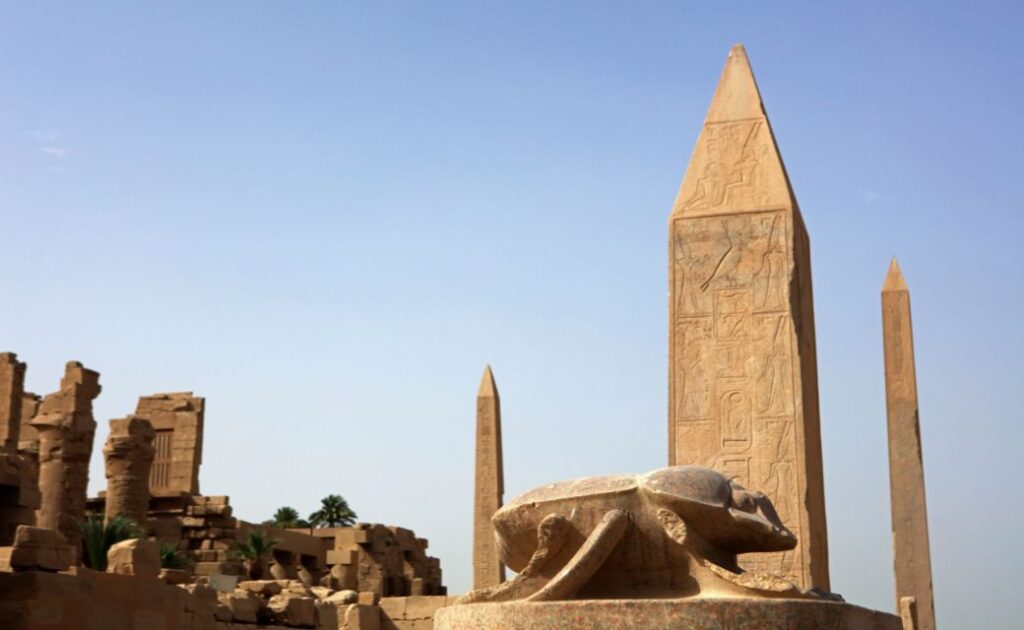
Tall, slender, and crowned with a pointed tip, the Egyptian obelisk was sunlight captured in stone. Built as monuments to the sun god Ra, their tapering shafts symbolised a sunbeam, while the pyramidion at the top, often gilded, was a bridge between earth and the divine, and a testament to the pharaoh’s power.
Many obelisks stood in pairs at temple entrances, guarding sacred spaces and proclaiming royal achievements. Hieroglyphs carved into their sides recorded victories, dedications, and acts of devotion, transforming each monolith into a lasting story of pharaonic glory.
The earliest known obelisk was built by Pharaoh Senusret I at Heliopolis around 1970 BCE (3994 years ago). Later rulers, including Thutmose III, Ramses II, and Hatshepsut, raised even taller and more ambitious monuments.
Obelisks were carved from single blocks of red granite quarried at Aswan. Workers used dolerite pounding stones to chip away at the hard rock, shaping the shaft with careful precision. The surfaces were smoothed, inscriptions added, and the pyramidion polished and covered in electrum. Transported on massive Nile barges during the flood season, the obelisks were moved on wooden sledges lubricated with water, then raised upright using ramps, sand pits, and levers, a feat of engineering that still fascinates historians today.
The unfinished obelisk at Aswan, abandoned due to cracks, would have measured 42 m and weighed 1,200 tons. Though many were later carried to Rome, London, Paris, and New York, obelisks remain deeply Egyptian, enduring monuments of stone, sunlight, and divinity. It really makes you wonder… how?