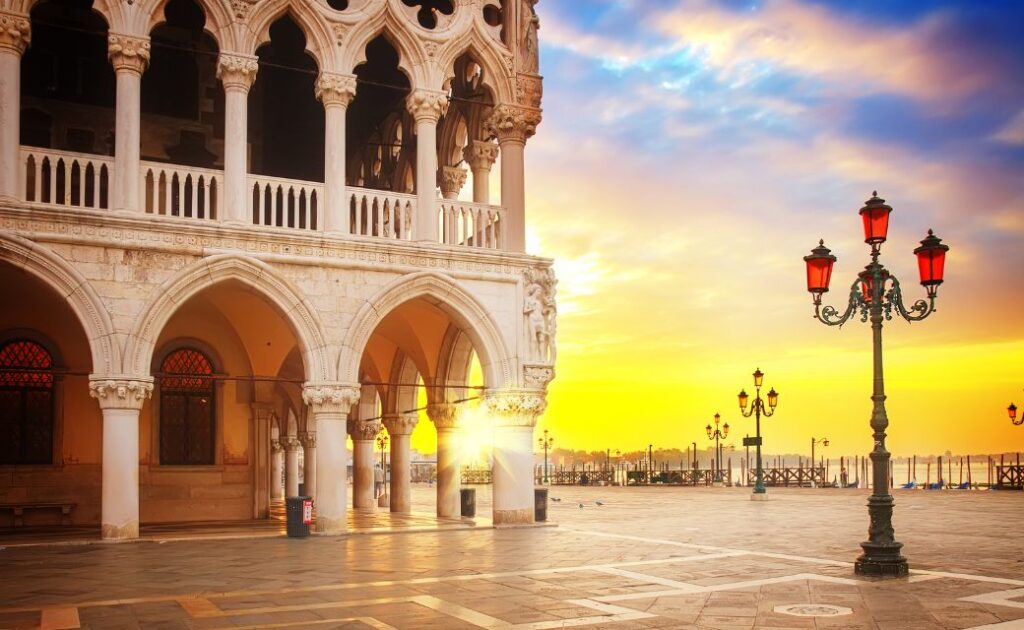
In the mid-19th century, Venice switched from oil lamps to gas, which gave off a strong smell and an unflattering yellow glow. While many were able to tolerate the smell, it was the colour that bothered them most, especially the artists who came to paint the Piazza San Marco.
The solution was found on Murano Island, home of the famed Venetian glass. By adding gold or selenium to the molten glass, they created pink/ rose-coloured lamps. The result was a warm orange glow that reminded many of a sunset.
By the 20th century, gas lamps were replaced by electric ones. Yet the pink/ rose glass remained, giving the city its soft, romantic atmosphere that endures to this day. Among the city’s 10000 plus lights, an estimated 4000 are the classic Venetian lanterns, casting their glow over canals, bridges, and piazzas, a reminder to visitors why Venice has long been called “Venezia città di luce”, or Venice, the City of Light.