Vajdahunyad Castle began as Hungary’s great architectural experiment, a temporary showpiece built for the 1896 Millennium Exhibition to tell the story of 1000 years of Hungarian architecture in one fantastic walk-through structure. Crafted from wood, plaster, canvas, and cardboard, it was never intended to survive beyond the celebrations.
Architect Ignác Alpár combined elements from 21 different buildings across Hungary to create a single complex. Romanesque, representing the age of the Árpád dynasty. Gothic, reflecting the periods of later Hungarian royal houses. Renaissance and baroque, symbolising the era of the Habsburg family. The overall design drew inspiration from historic buildings, including Hunyad Castle in Transylvania (now in Romania), earning it the nickname “Dracula’s Castle.”
Visitors fell in love with it, and demand for a permanent version grew so strong that the entire complex was rebuilt in stone and brick between 1904 and 1908. Today, the castle houses the Hungarian Agricultural Museum.
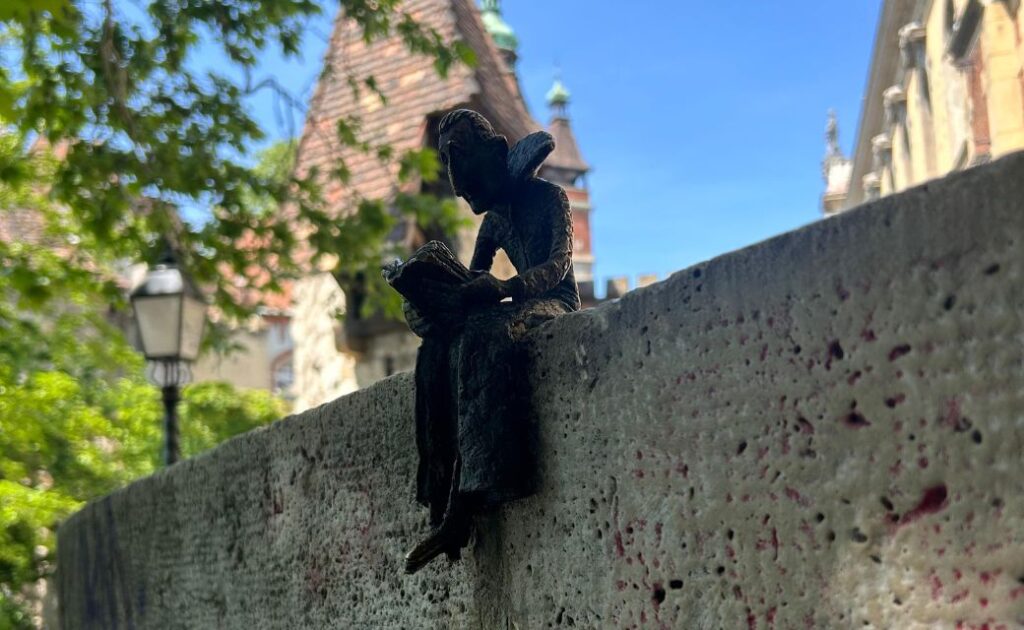
Originally meant to be temporary, Vajdahunyad Castle has become a permanent symbol of Hungary’s architectural legacy, and it now houses Kolodko’s miniature statue of Béla Lugosi, the legendary actor behind Dracula, who couldn’t have found a more fitting home.